Choosing the right footwear can improve both comfort and foot health. Many people compare medicated shoes and regular shoes because they serve different needs. Medicated shoes are designed to provide extra support, comfort, and protection for people with foot-related concerns. Regular shoes are made for everyday wear and focus on general comfort and style.
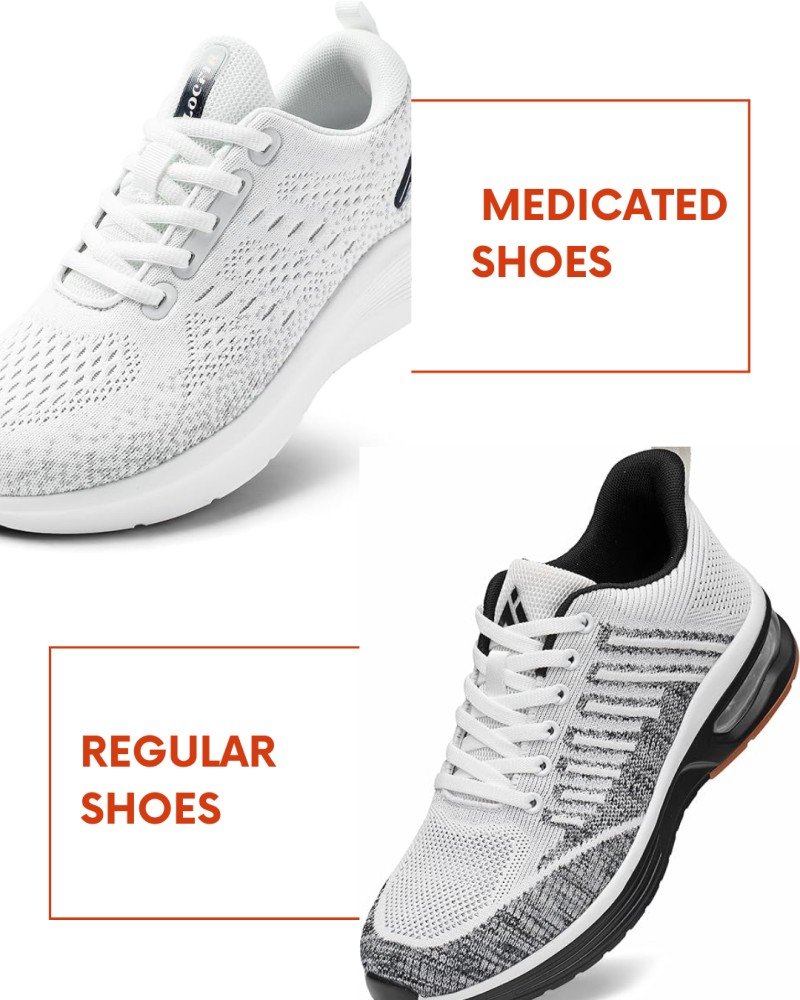
In this article, we’ll compare medicated shoes and regular shoes based on features, comfort, support, performance, pricing, and overall value. This will help you decide which option is right for your needs.
Let’s see which one suits you better.
Medicated Shoes vs Regular Shoes: Quick Overview
| Feature | Medicated Shoes | Regular Shoes |
| What They Are | Medicated shoes are specially designed footwear created to support foot health and reduce pressure on sensitive areas. They are often used as part of managing certain medical or orthopedic conditions. | Regular shoes are everyday footwear designed for general comfort, protection, and style. They come in a wide range of designs for casual, work, sports, and formal use. |
| What They Do | They provide enhanced cushioning, arch support, stability, and room for custom orthotics when needed. Their design helps improve comfort during walking and daily activities. | They protect the feet and provide basic support for routine movement. Features and support levels vary depending on the shoe type and intended purpose. |
| Who They’re For | Suitable for people with diabetes, foot pain, mobility concerns, orthopedic conditions, or those who require extra support. | Suitable for individuals without specific foot health needs who want comfortable footwear for everyday wear, exercise, or fashion purposes |
Medicated Shoes vs Regular Shoes: Comparison Table
| Aspect | Medicated Shoes | Regular Shoes |
| Features | Extra cushioning, arch support, pressure relief, wider fit, orthotic-friendly design | Standard cushioning, general support, wide range of styles and materials |
| Pricing | Usually higher due to specialized design and medical features | Available across various price ranges, including budget-friendly options |
| Ease of Use | Comfortable for long wear and specific foot conditions; may require proper fitting | Easy to buy and wear for everyday activities |
| Pros | Improved comfort, better support, helps manage foot-related issues, reduces pressure on feet | More style choices, widely available, suitable for general daily use |
| Cons | Higher cost, fewer fashion-focused designs, may be unnecessary for healthy feet | Limited therapeutic support, may not address medical or orthopedic needs |
| Comfort Level | Designed for enhanced comfort and foot protection | Comfort varies depending on brand and shoe type |
| Customization | Often accommodates custom orthotics and inserts | Limited customization options |
| Ideal For | People with foot pain, diabetes, orthopedic concerns, or mobility issues | People looking for everyday footwear without specialized support needs |
Medicated Shoes vs Regular Shoes: Detailed Comparison
1. Ease of Use
When comparing ease of use, both shoe types are simple to wear, but they serve different user needs.
Medicated Shoes
- Designed for all-day comfort and support.
- Often include adjustable closures for a customized fit.
- May require professional fitting in some cases.
Regular Shoes
- Easy to find and purchase in standard sizes.
- Available in many styles for different occasions.
- No special fitting is usually required.
Verdict: If you want a straightforward everyday option, regular shoes are convenient. If comfort and foot care are priorities, medicated shoes offer additional benefits.
2. Features
When comparing features, medicated shoes focus on foot health, while regular shoes focus on general comfort and style.
Medicated Shoes
- Enhanced cushioning and shock absorption.
- Arch support and pressure-relief design.
- Wider toe box for extra comfort.
- Compatible with custom orthotics.
Regular Shoes
- Standard cushioning and support.
- Available in various materials and designs.
- Specialized models for sports, work, or casual use.
- Fashion-oriented options.
Verdict: If specialized support matters most, medicated shoes stand out. For variety and style, regular shoes provide more options.
3. Performance
When comparing performance, the right choice depends on how and where the shoes will be used.
Medicated Shoes
- Help reduce foot fatigue during long periods of standing or walking.
- Promote better weight distribution.
- Can improve comfort for people with foot conditions.
Regular Shoes
- Suitable for routine daily activities.
- Performance varies depending on the shoe category.
- Athletic models may offer activity-specific benefits.
Verdict: For long-term comfort and foot protection, medicated shoes perform well. For general daily activities, regular shoes are usually sufficient.
4. Pricing
When comparing pricing, there is often a noticeable difference between the two options.
Medicated Shoes
- Usually cost more due to specialized construction.
- Higher-quality support materials can increase the price.
- Some models may qualify for medical reimbursement in certain situations.
Regular Shoes
- Available at a wide range of price points.
- Budget-friendly options are easy to find.
- Premium models can still be expensive.
Verdict: If affordability is your main concern, regular shoes offer more choices. If foot support is a priority, the added cost of medicated shoes may be worthwhile.
5. Support
When comparing support, this is one of the biggest differences between the two shoe types.
Medicated Shoes
- Designed specifically for foot stability.
- Provide strong arch and heel support.
- Help reduce pressure on sensitive areas.
Regular Shoes
- Offer basic support for everyday use.
- Support levels vary by brand and design.
- Some models may not provide adequate stability for certain users.
Verdict: If maximum support is needed, medicated shoes have a clear advantage. For general use, regular shoes provide adequate support for many people.
6. Comfort
When comparing comfort, individual needs play a major role.
Medicated Shoes
- Built to reduce discomfort and pressure points.
- Extra room and cushioning improve long-term wearability.
- Helpful for people with sensitive feet.
Regular Shoes
- Comfort varies by design and material.
- Many models feel comfortable for short and moderate wear.
- Fashion-focused designs may prioritize appearance over comfort.
Verdict: For extended wear and sensitive feet, medicated shoes are often more comfortable. For everyday activities, many regular shoes provide satisfactory comfort.
7. Style and Appearance
When comparing appearance, regular shoes generally offer greater variety.
Medicated Shoes
- Focus on function and support.
- Modern designs are improving, but options may be more limited.
Regular Shoes
- Available in countless colors, styles, and trends.
- Suitable for casual, formal, and athletic settings.
- Easier to match with personal fashion preferences.
Verdict: If style is a top priority, regular shoes offer more flexibility. If comfort and foot care come first, medicated shoes remain a practical choice.
8. Customization
When comparing customization, medicated shoes provide more flexibility for specialized needs.
Medicated Shoes
- Often designed to accommodate custom orthotics.
- Adjustable features help improve fit.
- Better suited for individual foot conditions.
Regular Shoes
- Limited customization options.
- Most rely on standard sizing and factory insoles.
Verdict: If you need a personalized fit, medicated shoes are the stronger option. For standard footwear needs, regular shoes work well.
9. Durability
When comparing durability, both categories offer long-lasting options depending on quality.
Medicated Shoes
- Built to maintain support over extended use.
- Durable materials are often used in key support areas.
Regular Shoes
- Durability varies greatly by brand and purpose.
- Athletic and premium models may last longer than budget options.
Verdict: Both can be durable, but medicated shoes are often designed to retain their supportive structure for longer periods.
10. Intended Users
When comparing intended users, each type is designed for different requirements.
Medicated Shoes
- Suitable for people with diabetes, foot pain, orthopedic concerns, or mobility issues.
- Designed to support foot health and comfort.
Regular Shoes
- Suitable for people without specific medical footwear needs.
- Ideal for everyday wear, fashion, work, and recreational activities.
Pros and Cons of Medicated Shoes and Regular Shoes
Both medicated shoes and regular shoes have advantages and drawbacks. The right choice depends on your daily needs, budget, and foot health. Here’s a quick look at the main benefits and limitations of each option.
Medicated Shoes
Pros
- Help make long hours of walking more comfortable.
- Reduce strain during daily activities.
- Offer good value for people with ongoing foot concerns.
- Support better mobility for some users.
- Can help reduce the need to replace uncomfortable shoes frequently.
Cons
- Cost more than many standard footwear options.
- Fewer choices when it comes to fashion trends.
- May feel unnecessary for people without foot issues.
- Some styles can appear more functional than stylish.
- Finding the right fit may take extra time.
Regular Shoes
Pros
- Available in a wide range of styles and designs.
- Easy to find in stores and online.
- Offer options for almost every budget.
- Suitable for casual, work, and social settings.
- Allow users to follow changing fashion trends.
Cons
- Comfort levels can vary significantly between models.
- Frequent replacements may increase long-term costs.
- Some styles focus more on appearance than practicality.
- May not meet the needs of users with ongoing foot concerns.
- Choosing the right pair can be difficult due to the large number of options available.
Conclusion
When comparing medicated shoes vs regular shoes, the main difference comes down to purpose. Medicated shoes focus on comfort, foot care, and extra support for people with specific needs. Regular shoes are designed for everyday use and offer more choices in style, design, and price.
Both options have their strengths. Medicated shoes can help improve daily comfort, while regular shoes work well for general activities and casual wear. The right choice depends on your foot health, lifestyle, and budget.
Think about what matters most to you before making a decision. Whether you need added support or simply want a comfortable pair for everyday use, there is an option that fits your needs.
(FAQs)
1. What is the main difference between medicated shoes and regular shoes?
Medicated shoes are designed to provide extra comfort, protection, and support for people with foot-related concerns. Regular shoes are made for everyday wear and focus on general comfort, style, and functionality.
2. Who should wear medicated shoes?
Medicated shoes are suitable for people who experience foot pain, have diabetes, need extra support, or want greater comfort during daily activities.
3. Can healthy individuals wear medicated shoes?
Yes. Anyone can wear medicated shoes. While they are often recommended for specific foot conditions, some people choose them simply for their added comfort and support.
4. Are medicated shoes more expensive than regular shoes?
In most cases, yes. Medicated shoes usually cost more because they include specialized design elements and materials aimed at improving comfort and foot care.
5. Do medicated shoes last longer than regular shoes?
Durability depends on the brand, materials, and how often the shoes are used. However, many medicated shoes are built to maintain their shape and support over long periods.
6. Can I use custom insoles with regular shoes?
Some regular shoes can accommodate custom insoles, but not all designs have enough space. Medicated shoes are often made to work more easily with orthotic inserts.
7. Are regular shoes suitable for people with foot problems?
That depends on the condition and the shoe design. Some supportive regular shoes may help, but people with ongoing foot issues often benefit from footwear designed specifically for foot care.
8. Which is better for all-day wear: medicated shoes or regular shoes?
For long hours of standing or walking, medicated shoes often provide greater comfort and support. Regular shoes can still work well if they are properly fitted and designed for extended use.
9. Do medicated shoes look different from regular shoes?
Some medicated shoes have a more functional appearance, but many modern designs look similar to standard casual or walking shoes.
10. How do I choose between medicated shoes and regular shoes?
Consider your comfort needs, foot health, daily activities, and budget. If you need extra support and protection, medicated shoes may be a better choice. If you want general-purpose footwear, regular shoes are often sufficient